Translate

Thursday, September 6, 2012

ኢሕአዴግና የጠቅላይ ሚኒስትሩ ቦታ ጉዳይ

ኢሕአዴግና የጠቅላይ ሚኒስትሩ ቦታ ጉዳይ

የኢትዮጵያ ህዝቦች አብዮታዊ ዴሞክራሲ ግንባር /ኢህአዴግ/ ሥራ አስፈጻሚ ኮሚቴ መደበኛ ስብሰባ የተለያዩ ውሣኔዎችን አሣልፎ ማክሰኞ፤ ነሐሴ 29 ቀን 2004 ዓ.ም ማምሻውን ተጠናቅቋል።
የፊደል ቁመት 
ሰሎሞን ክፍሌ
ስብሰባው በተለይ ከጠቅላይ ሚኒስትር መለስ ዜናዊ ሕልፈት በኋላ ባሁኑ ወቅት «ሀገሪቱን እየመራ ያለው ማነው?» ለሚለው እጅግ አንገብጋቢ ጥያቄ በቂ ምላሽ ይሰጣል ተብሎ ተጠብቆ ነበር።

ትላንት ማታ ባሣለፋቸው ውሣኔዎች ላይ ግን ይህን አስመልክቶ በግልፅ እና በማያሻማ ቋንቋ የተገለፀ ነገር የለም።

የተባለው፥ “… የግንባሩን ሊቀ መንበርና ምክትል ሊቀ መንበር የመሰየም ጉዳይ የግንባሩ ምክር ቤት ሥልጣን በመሆኑ በመስከረም 2005 የመጀመሪያ ሣምንት በሚካሄደው የምክር ቤቱ ስብሰባ እንዲፈፀም የሥራ አስፈፃሚ ኮሚቴው ወስኗል …” ነው።

«ዲሞክራሲ በተግባር ፕሮግራም» ይህንኑ መነሻ ያደረገ ዝግጅት አለው። ሰሎሞን ክፍሌ የሕገ መንግሥት ባለሙያ ጋብዞ አወያይቷል።

ዝግጅቱን ያዳምጡ፡፡
Ethiopia-power-transfer-getachew-metaferia

Wednesday, September 5, 2012

Ethiopian News in Amharic - Tuesday, September 04, 2012 - YouTube

Ethiopian News in Amharic - Tuesday, September 04, 2012 - YouTube: ""

'via Blog this'

Tuesday, September 4, 2012

Challenges for Ethiopia’s new leader - Africa | IOL News | IOL.co.za


iol news pic Hailemariam Desalegn
REUTERS
New Ethiopian leader Hailemariam Desalegn.
New Ethiopian leader Hailemariam Desalegn, relatively little-known and long overshadowed by his late mentor Meles Zenawi, faces tough challenges at home and in the volatile Horn of Africa.
In a rare peaceful handover of power for Ethiopia, former water engineer Hailemariam, 47, takes over as interim leader from Meles, who had ruled with an iron fist since toppling dictator Mengistu Haile Mariam in 1991.
In a country long dominated by its major ethnic groups - most recently the Tigray people, like Meles - Hailemariam notably comes from the minority Wolayta people, from the Southern Nations, Nationalities and Peoples Region, where he was president for five years.
A close ally of Meles as deputy prime minister and foreign minister since 2010, Hailemariam was elected deputy chair of the ruling coalition, the Ethiopian Peoples' Revolutionary Democratic Front (EPRDF), after the party's fourth win, a landslide victory in 2010.
But within the EPRDF, some of the most influential figures hail from the northern Tigray region, members of Meles's ex-rebel group turned political party, the Tigrayan People's Liberation Front (TPLF).
Analysts have suggested that several others are still jostling for power behind closed doors in the often secretive ruling coalition, even if in the open they are not taking part in the running for the top job of prime minister.
Hailemariam, while a protege of Meles, is therefore seen as an outsider by some, although many expect an outwardly smooth transition with little change in policy.
“Many see (Hailemariam) as a figurehead, part of a gesture by Meles and the ethnic Tigrayans to give more prominence to other ethnic groups,” said Jason Mosley of Britain's Chatham House think-tank.
Government spokesman Bereket Simon has said Hailemariam will remain in the post until national elections in 2015, although formally he must be selected by the ruling party, which holds all but one of the parliament's 547 seats.
But the International Crisis Group (ICG) think-tank suggests Hailemariam's appointment may be “window dressing, designed to placate potential critics, while the Tigrayan TPLF elite keep real power.”
Hailemariam - in Ethiopian tradition, known by his first name, meaning “the power of Saint Mary” - is also a Protestant, the first to lead Ethiopia, and unlike the majority of Ethiopia's Christians, who follow Orthodox traditions.
But others say Hailemariam's position outside the Tigray power base could in fact prove a strength.
“His ethnicity is considered an advantage, because it is a minority in a multi-ethnic region and, most importantly, not from the numerically dominant Oromo or Amhara,” the ICG added in a recent report.
Critics also point to his relatively young age, lack of experience and the fact he was not part of the rebel movement which toppled Mengistu, unlike many in the ruling elite.
Instead, Hailemariam, who studied civil engineering in Addis Ababa, was completing his master's degree at Finland's Tampere University when Mengistu fell.
“He is a political novice, he has not been part of the old guard, he has not been in the bushes fighting with the rebels when they fought against Mengistu,” exiled opposition leader and former mayor of Addis Ababa Berhanu Nega told the BBC.
“He is a Medvedev for a group of Putins in the ruling party with their own internal squabbles,” he added, drawing parallels with Russian political dynamics.
Rights groups including Amnesty International and Human Rights Watch have appealed for an end to what they criticised as a crackdown on opposition groups and journalists under Meles, but there is little beyond rhetoric to judge how Hailemariam will act.
At Meles's funeral, Hailemariam vowed that “all his initiatives will keep going forward”, and the interim prime minister has spoken enthusiastically about ensuring democracy and accountable rule for the country.
“Our path to a future of realistic development, peace and stability lies in acceptance and implementation of democratic norms, good governance and sustainable development,” Hailemariam said in at an international labour conference last year.
“We are well aware that development, evenly applied, decreases the probability of political exclusion, social disruption and misery. No one should be ignored. All must be part of the country's democratic decision-making process.”
Like Meles, Hailemariam has praised Ethiopia's close ties to both the West - most notably Washington - and to China, a key trade partner.
Speaking at the opening of the US embassy in Addis Ababa in 2011 he praised the “long-standing and time-tested relationship” with Washington, while he told Beijing's state broadcaster CCTV in July that Ethiopia's “cooperation with China is a win-win approach.” - AFP

Ethiopian News in Amharic - Monday, September 03, 2012 - YouTube

Ethiopian News in Amharic - Monday, September 03, 2012 - YouTube: ""

'via Blog this'

Saturday, September 1, 2012

Ethiopian News in Amharic Arrival For Melese's funeral - Friday, August 31, 2012 - YouTube

Ethiopian News in Amharic - Friday, August 31, 2012 - YouTube: ""

'via Blog this'

Ethiopia prepares first North Korean type state funeral after 80 years

The regime of the deadly dead Melse Zenawie is preparing  a north Korean type funeral  for Mlese Zenawie by forcing to hold candle light  and  public weeping  all over the country.


Ethiopia has had a long line of leaders dying in secret, hidden behind closed doors, but not a long history of funerals.

In 1913, one of Ethiopia's most renowned emperors, Menelik II, died. His death remained a secret until 1916 when officials finally announced that he had succumbed to a stroke years earlier.
Haile Selassie, Ethiopia's last emperor, officially died of natural causes in 1975, but is widely believed to have been murdered by the brutal regime of Mengistu Hailemariam, suffocated and buried under a toilet.
Last month, Ethiopian Prime Minister Meles Zenawi died of an unknown illness after a mysterious, two month-long disappearance from public view, and will be buried on Sunday in the first state funeral for a leader in over 80 years.
The cloud of secrecy and gossip that has surrounded the deaths of several Ethiopian leaders stems from a desire to ensure a stable succession, according to analysts.
"If the death is announced there is the fear that it can provoke a lot of trouble because different people can ask for the throne," said Estelle Sohier from the University of Geneva, author of a book on Menelik.
"To hide a death of a leader is a way to spare time, to save time, to settle the succession," added Sohier.
Though Meles' death was announced hours after he died in a Brussels hospital, the secrecy surrounding his illness led some to question whether the government was getting its house in order to ensure a smooth transition.
Days after Meles died, the government confirmed that deputy Prime Minister Hailemariam Desalegn will take over power until national elections in 2015.
Author Michela Wrong said this pattern of secrecy is common following the sudden deaths of leaders throughout Africa, not only in Ethiopia.
"The ruling elite is motivated by the desire to maintain the status quo, from which it benefits. It wants stability," she said.
Sohier draws parallels between the death of Menelik whose successor was disputed among the royal family, and the death of Meles, whose clear successor was not known until the government confirmed Hailemariam's takeover.
Ethiopia's constitution states the deputy will take over in the absence of the prime minister, but does not specify what happens in the case of the leader's death. Article 75 rest flow 
Meles will be given a state funeral on Sunday, the first offered to a reigning head of state since the death of Empress Zawditu in 1930.
"This is the first time for 82 years that Ethiopians have had an opportunity to show what they think about their ruler," said Patrick Gilkes, an Ethiopia-based historian and author of "The Dying Lion," which examines feudalism in Ethiopia.
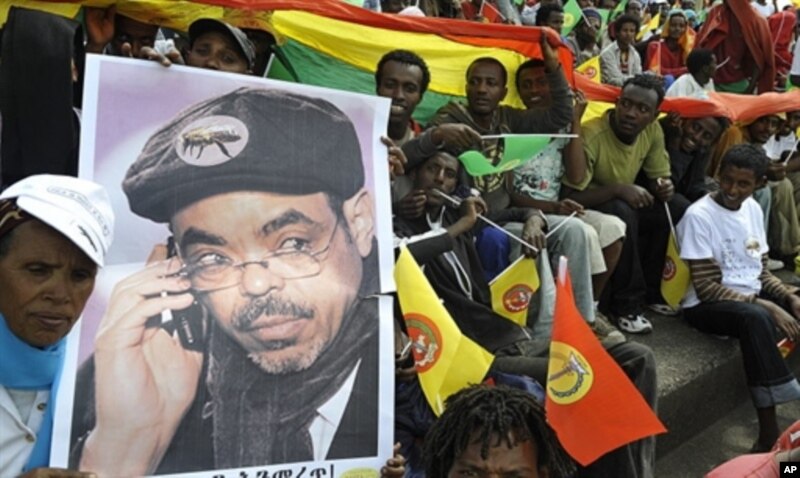
The gesture solidifies his memory in national history, pointing also to the fact that Ethiopians have not had a chance to mourn the loss of a leader in nearly a century following a series of rocky regime changes, observers say.
No public mourning was staged after Haile Selassie's death while Mengistu, who was deposed by Meles in 1991, is still alive in exile in Zimbabwe.
Immediately after Haile Selassie died, many people in Addis were "very sad" said Ethiopian journalist Tsegaye Tadesse, 78, who was in Addis Ababa at the time, but Mengistu's regime did not permit a public funeral.
"There was an outpouring of grief, yes, but it was limited," he said.
Haile Selassie's remains were exhumed in 1992 and a public funeral was held though the government did not hold a state funeral for the late emperor, who was buried in Addis Ababa's Trinity Cathedral, where Meles too will be buried.
The decision to bury the former Marxist leader in the same cathedral as Haile Selassie, deceased patriarchs of Ethiopia's Orthodox Church and war martyrs, suggests that authorities want Meles remembered as a national hero.
"Eulogising late leaders, while glossing over their very obvious faults, is something you see across the world," Wrong added. "The leaders who were being vilified up until a moment ago suddenly take on a new, golden aura."
Meles, while credited with widespread economic growth was also chided by critics for his human rights record.
But Tsegaye said Meles deserves a place in history among Ethiopia's finest for the development he brought to Ethiopia.
"We have got top leaders like Menelik II, Haile Selassie, but Meles, he is in my opinion even better than the others," he said.